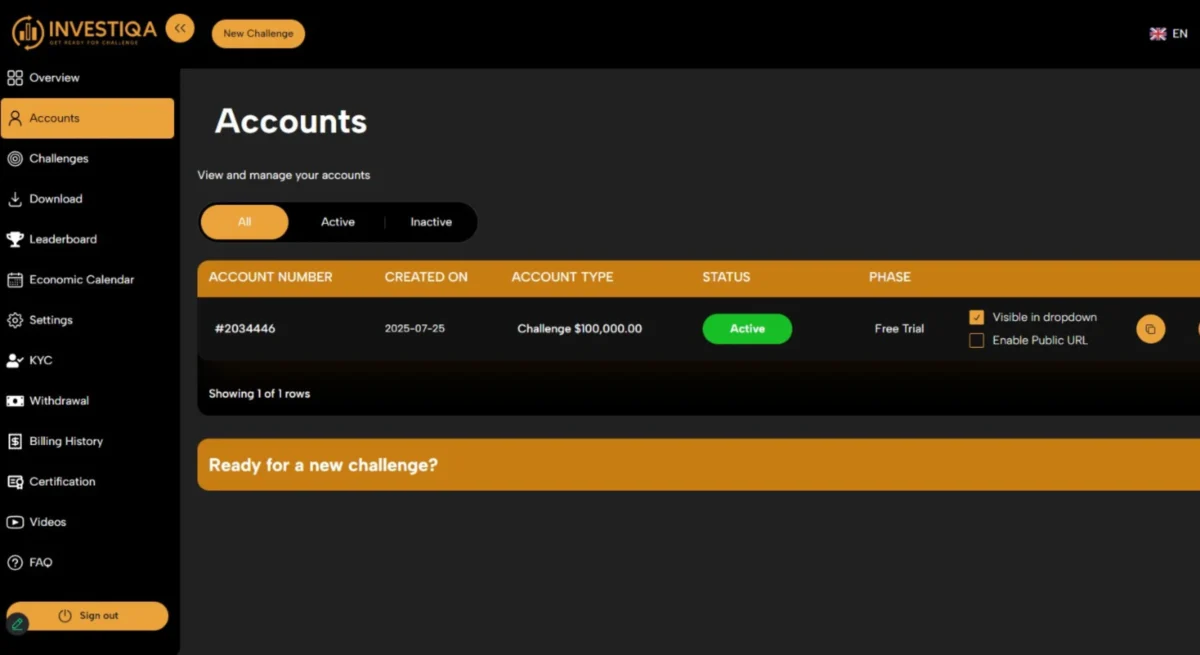
Setting up a demo trading account is typically straightforward, but choosing the right platform and configuring it properly can significantly impact your learning experience.
Step 1: Choose a Reputable Platform
Selecting the right demo trading platform is crucial for your educational journey. Look for platforms that offer:
- Real-time market data and pricing
- Comprehensive charting tools and technical indicators
- Multiple asset classes (stocks, forex, commodities, cryptocurrencies)
- Educational resources and support materials
- User-friendly interface suitable for beginners
Platforms like Investiqa provide excellent demo environments specifically designed for beginners, combining realistic trading conditions with educational support and community features that enhance the learning experience.
Step 2: Register and Fund Your Virtual Balance
Most demo accounts require basic registration information including name, email, and sometimes phone number. Once registered, you’ll typically receive a virtual balance ranging from $10,000 to $100,000 in simulated funds.
Take this virtual balance seriously – treat it as if it were real money. This mindset helps develop proper risk management habits and realistic expectations about trading performance.
Step 3: Navigate and Customize the Interface
Spend time exploring the platform’s features, customizing charts, setting up watchlists, and familiarizing yourself with order types. Most platforms offer tutorials or guided tours that walk beginners through essential features and functionalities.
Top Demo Trading Account Platforms to Consider
MetaTrader 4/5: Popular for forex and CFD trading, offering advanced charting tools and automated trading capabilities. The platform is widely used by professional traders and provides excellent demo account functionality.
TradingView: Known for its superior charting capabilities and social trading features. While primarily a charting platform, it partners with various brokers to offer integrated trading functionality.
Investiqa Demo Platform: Specifically designed for aspiring proprietary traders, Investiqa offers a 30-day risk-free demo environment with educational support, community interaction, and pathways to funded trading accounts for qualified users.
eToro: Offers social trading features alongside traditional demo accounts, allowing beginners to observe and learn from successful traders while practicing their own strategies.
Best Practices for Demo Trading Success
To maximize the educational value of demo trading for beginners, following proven best practices is essential for developing skills that translate to real trading success.
Treat Demo Trades Like Real Money
The biggest mistake beginners make is treating demo money carelessly because “it’s not real.” This approach develops bad habits that prove costly in live trading. Set realistic position sizes, implement proper stop-losses and make decisions as if your financial future depends on them.
Maintain Detailed Trading Records
Keep comprehensive records of every trade including entry/exit points, reasoning behind decisions, market conditions and emotional state. This documentation becomes invaluable for identifying patterns, improving strategies and understanding personal trading psychology.
Focus on Risk Management
Use demo trading to develop and test risk management rules. Practice setting stop-losses, determining position sizes based on account balance, and never risking more than a small percentage of capital on any single trade. These habits are crucial for long-term trading success.
Avoid Overtrading
Many beginners fall into the trap of excessive trading because demo accounts make it “cost-free.” However, overtrading is a significant problem in live trading that stems from poor habits developed during demo practice. Focus on quality trades rather than quantity.
Analyze Performance Regularly
Review your trading performance weekly and monthly. Identify which strategies work best, what market conditions favor your approach and where improvements are needed. This analytical approach accelerates learning and skill development.
Common Demo Trading Mistakes to Avoid
Understanding and avoiding common pitfalls can significantly enhance your demo trading for beginners experience and better prepare you for live trading.
Taking Excessive Risks
Because demo money isn’t real, beginners often take unrealistic risks they would never consider with actual capital. This behavior creates unrealistic expectations and develops dangerous habits that can lead to significant losses in live trading.
Ignoring Emotional Aspects
Some traders dismiss the emotional component of demo trading, believing that real emotions only emerge with real money. However, even virtual trading can trigger emotional responses that provide valuable learning opportunities about personal psychology and decision-making patterns.
Rushing to Live Trading
Many beginners transition to live trading too quickly, often after just a few profitable demo trades. Successful demo trading requires consistent profitability over extended periods, typically several months, before considering live market participation.
Neglecting Education
Demo trading should complement, not replace educational efforts. The most successful approach combines hands-on demo practice with continuous learning about market analysis, trading psychology and risk management principles.
Advanced Demo Trading Account Strategies
As your demo trading for beginners skills develop, implementing more sophisticated approaches can accelerate your learning and prepare you for advanced trading concepts.
Multiple Strategy Testing
Use demo accounts to test multiple strategies simultaneously, comparing their performance across different market conditions. This approach helps identify which methods suit your personality and trading style while building a diversified skill set.
Market Condition Analysis
Practice trading in various market conditions – trending markets, sideways markets, high volatility periods, and quiet trading sessions. Understanding how your strategies perform across different environments is crucial for long-term success.
Economic Event Trading
Use demo accounts to practice trading around economic announcements, earnings releases, and major news events. These high-impact situations often provide the most challenging trading conditions and valuable learning experiences.
Transitioning from Demo Trading Account to Live Trading
The transition from demo to live trading represents a critical milestone in every trader’s journey. Demo trading for beginners should prepare you for this transition through systematic preparation and realistic expectations.
Performance Benchmarks
Before considering live trading, establish clear performance benchmarks during your demo phase. Most successful traders recommend achieving consistent profitability for at least 3-6 months in demo conditions before risking real money.
Starting Small
When transitioning to live trading, start with minimal amounts – much smaller than your demo account balance. This approach helps manage the psychological adjustment while maintaining affordable risk levels during the learning process.
Psychological Preparation
Recognize that live trading will feel different despite identical technical setups. The emotional intensity increases significantly when real money is involved, making psychological preparation as important as technical skill development.
Building a Trading Community
Successful demo trading for beginners often benefits from community support and shared learning experiences. Platforms like Investiqa provide integrated community features where traders can share experiences, discuss strategies and learn from more experienced participants.
Learning from Others
Engage with other demo traders to share insights, discuss market analysis, and learn from different perspectives. This collaborative approach accelerates learning and provides valuable networking opportunities within the trading community.
Mentorship Opportunities
Many platforms offer mentorship programs or access to experienced traders who provide guidance and feedback. Taking advantage of these opportunities can significantly enhance your demo trading experience and prepare you for professional trading success.
The Path to Funded Trading
For ambitious beginners, demo trading for beginners can serve as preparation for proprietary trading opportunities. Companies like Investiqa offer pathways from demo trading to funded accounts, where skilled traders can access significant capital based on demonstrated performance.
Challenge Accounts
Many prop trading firms offer challenge accounts that function similarly to advanced demo trading but with specific performance targets and rules. Success in these challenges can lead to funded trading opportunities with profit-sharing arrangements.
Performance Evaluation
Understanding how professional trading firms evaluate performance helps focus your demo trading practice on relevant metrics like risk-adjusted returns, maximum drawdown limits, and consistency over time.
Technology and Tools for Demo Trading Account
Modern demo trading for beginners benefits from sophisticated technology and analytical tools that were previously available only to professional traders.
Automated Trading Systems
Demo accounts provide excellent environments for testing automated trading systems and expert advisors. This exposure to algorithmic trading concepts prepares beginners for the increasingly automated nature of modern markets.
Mobile Trading
Practice using mobile trading applications during your demo phase, as real-world trading often requires mobility and flexibility. Familiarizing yourself with mobile platforms ensures you can manage positions regardless of your location.
Conclusion
Demo trading accont for beginners represents the foundation of successful trading careers, providing essential experience, skill development and psychological preparation without financial risk. Through systematic practice, careful analysis and continuous learning, demo trading transforms complete novices into knowledgeable market participants ready for live trading challenges.
The journey from demo trading to profitable live trading requires patience, discipline and commitment to continuous improvement. By treating your demo account seriously, following proven best practices and leveraging available educational resources, you’ll build the skills and confidence necessary for long-term trading success.
Remember that demo trading account for beginners is not just about learning to place trades – it’s about developing the complete skill set required for professional market participation. Open a demo account today, start practicing with discipline and purpose, and begin your transformation into a skilled and confident trader.
Ready to start your trading journey? Platforms like Investiqa offer comprehensive demo trading environments specifically designed for beginners, complete with educational support, community features and pathways to funded trading opportunities. Take the first step toward financial independence through skilled trading – your future self will thank you for starting today.
For additional information on paper trading fundamentals, visit Investopedia’s comprehensive guide to paper trading, which provides detailed explanations of simulated trading concepts and best practices.
👉 Visit Investiqa.com and open a free trial trading account today!